FBI Charges an Albany Woman Over an Alleged Islamic State-Inspired Plot Against the New York State Capitol
Prosecutors say Jessica Bowie surveilled the building for weeks and bought bomb components with money supplied by confidential sources.
Commentary & Analysis ·
Verified key facts
- Jessica Bowie, 35, of Albany, was arrested on Wednesday 19 August by the FBI's Joint Terrorism Task Force and charged with attempting to provide material support to the Islamic State group, according to CNN and NBC News
- Prosecutors allege she pledged allegiance to the group and discussed disguising an explosive device in a food-delivery bag, per The Washington Post
- The FBI says she carried out weeks of surveillance of the New York State Capitol, photographing it from several vantage points, and wanted to strike while state senators were meeting
- On 5 August she is alleged to have used 200 dollars supplied by a confidential source to buy materials at a Home Depot in Rensselaer, including a large container of nails
- On 19 August she is alleged to have paid 150 dollars for what she believed to be a handgun, magazine and ammunition, and was shown an explosive device supposedly built from her purchases
- Both the firearm and the explosive device were inert, according to CNN
- The charges were announced on Thursday 20 August
An arrest in Albany, announced the following day
The FBI's Joint Terrorism Task Force arrested a 35-year-old Albany woman on Wednesday and charged her with attempting to provide material support to the Islamic State group. The charges were made public on Thursday, and identify the defendant as Jessica Bowie.
CNN, NBC News and The Washington Post all reported the case from the charging documents, which describe an investigation that ran for weeks and relied on confidential sources working with the task force.
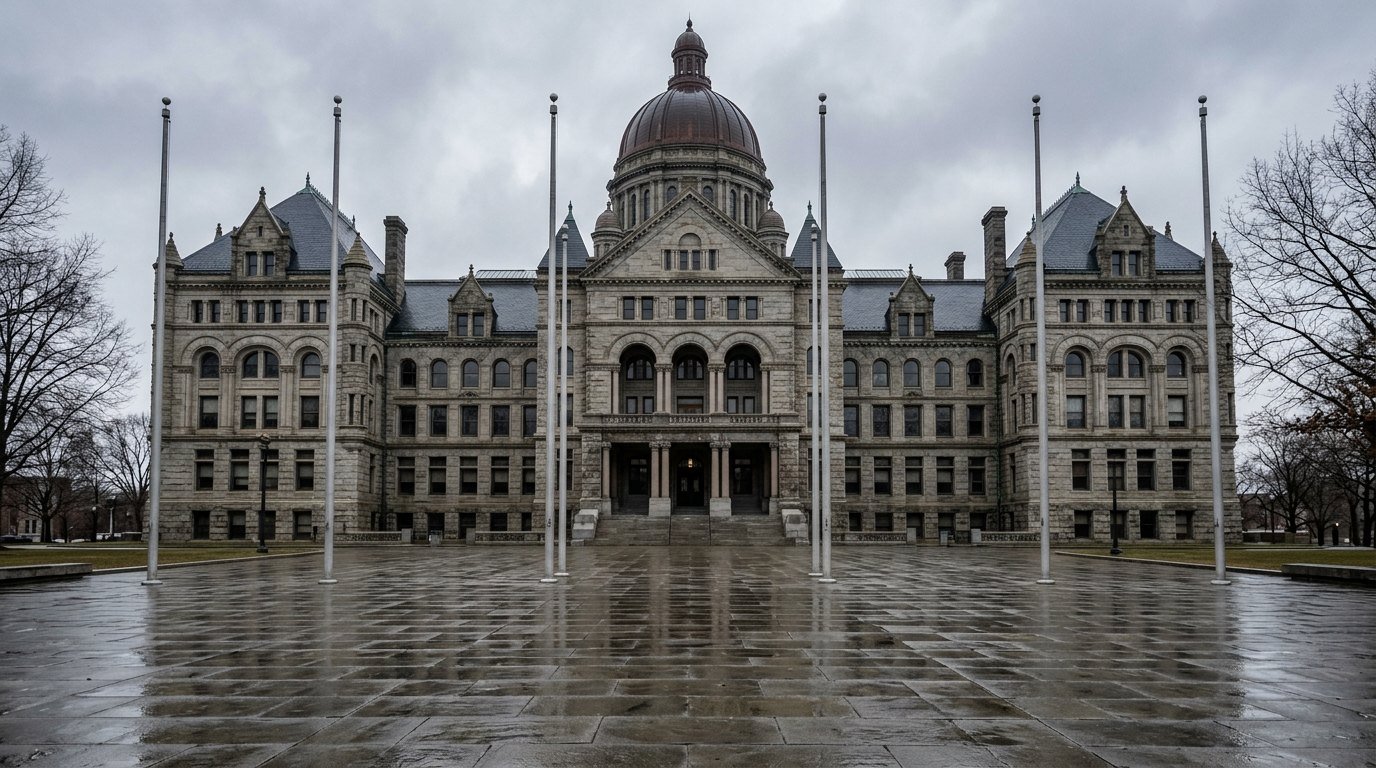
The alleged target was the New York State Capitol in Albany, the seat of the state legislature. Prosecutors say the plan was to strike at a time when state senators were meeting inside the building.
What prosecutors say the surveillance involved
According to the FBI's account, Bowie spent weeks conducting surveillance of the Capitol, taking photographs from a series of vantage points around the building. That activity, if proven, is the element that separates an expression of intent from preparation, and it is generally what allows a material-support charge to be brought.
Prosecutors also allege that she pledged allegiance to the Islamic State group, and that she discussed her plans in conversations with people she believed to be sympathisers but who were in fact confidential sources reporting to the task force.
The Washington Post reported that one of the methods discussed was disguising an explosive device inside a food-delivery bag, an approach that would allow a person carrying it to approach a building without attracting attention.
The purchases the FBI documents
The charging documents set out two specific transactions. On 5 August, investigators say, Bowie went to a Home Depot in Rensselaer, across the Hudson River from Albany, using 200 dollars provided by one of the confidential sources, and bought materials she believed would be used to build a bomb, including a large container of nails.
On 19 August she is alleged to have met the sources again and paid 150 dollars for what she believed was a handgun, a magazine and ammunition. At the same meeting she was shown an explosive device the sources presented as having been built from the materials she had bought.
Both the firearm and the device were inert. That is standard practice in operations of this kind, and it means no functioning weapon or explosive was ever in the defendant's possession.
Why the charge is material support rather than attempted bombing
The single count made public is attempting to provide material support to a designated foreign terrorist organisation. That framing reflects how these investigations are usually structured: the government does not have to prove that a bomb existed or that an attack was imminent, only that the defendant knowingly attempted to provide resources, including personnel, to the organisation.
It also reflects the involvement of confidential sources. Because the materials and the device were supplied or rendered inert by the government, a charge that depended on the operability of a weapon would be difficult to sustain.
Material-support prosecutions have been the principal federal tool in cases of this type for two decades, and they carry substantial sentences on conviction. The defence questions they invite are equally well established, and concern the degree to which the government's own sources shaped the conduct being prosecuted.
The building at the centre of the case
The New York State Capitol sits on Albany's Capitol Hill and houses the state Senate and Assembly chambers. It is open to the public, hosts school groups and tours through the year, and has the mixed security posture common to working legislative buildings: controlled entrances, but a large volume of routine visitors.
The allegation that the plan was timed to a Senate session is significant for that reason. Legislative sessions concentrate elected officials, staff and members of the public in a small number of rooms at predictable times.
No damage occurred and no members of the public were at risk from the materials involved, since the device shown to the defendant was inert throughout.
How the case reached the task force
The Joint Terrorism Task Force model puts FBI agents alongside state and local police officers in a single unit, and it is the structure through which nearly all US domestic terrorism investigations run. The Albany field office covers the Capital Region of New York.
The publicly available account does not explain what first brought Bowie to the task force's attention, and charging documents typically do not disclose that. What they do disclose is that by early August the investigation was advanced enough for sources to be funding and observing her purchases.
Neither the FBI nor the US attorney's office has alleged that she acted with anyone other than the confidential sources, and no co-defendants have been named.
What prosecutors must now prove about the inert devices
The case will turn on intent and on the defendant's own conduct rather than on the capability of the items she was shown. Prosecutors will seek to demonstrate that she believed the device was real, that she intended it to be used against the Capitol, and that her purchases and surveillance were steps towards that end.
The defence will have the material that operations of this kind always generate: recordings and messages produced in the company of government sources, and the question of who first proposed each escalation. Courts have repeatedly held that providing an opportunity is not entrapment, but the line is argued case by case.
Bowie is entitled to the presumption of innocence, and the allegations set out in the charging documents have not been tested in court. The next stage will be proceedings in federal court in Albany.
Sources
- CNN - Woman charged in ISIS-inspired terror plot to detonate explosive device at New York State Capitol, feds say
- NBC News - FBI thwarts an alleged ISIS-inspired plot to bomb New York Capitol
- The Washington Post - Woman arrested in alleged ISIS-inspired plot to bomb New York Capitol
- Associated Press via US News - New York woman charged in plot to set off explosives at state Capitol, kill lawmakers, FBI says
- Fox News - FBI arrests woman who allegedly plotted attack on New York state Capitol building
You may also like to read

Long Prison Terms for Myanmar Activists Who Protested the Election
Nine activists received terms reported at 27 and 37 years after protesting Myanmar's election and conscription, as opponents called the trials intimidation.

A Cessna Pilot Is Killed in a Midair Collision With a Pennsylvania State Police Helicopter at Carlisle Airport
A small plane struck a state police Bell 407 during a training flight in central Pennsylvania, killing the plane's pilot and injuring two troopers.

ICE Detains the Captain of the Boat That Capsized Near Liberty Island, and Says He Will Be Deported After Trial
Manuel Hernandez faces 13 reckless endangerment counts over the August 8 capsizing that killed a Queens mother and her five-month-old daughter.

Wildberries Warehouses Become a Flashpoint in Ukraine's Campaign Against Russia's War Economy
A Samara warehouse fire after a reported Ukrainian drone strike renewed debate over dual-use logistics, economic warfare and the workers caught in between.